
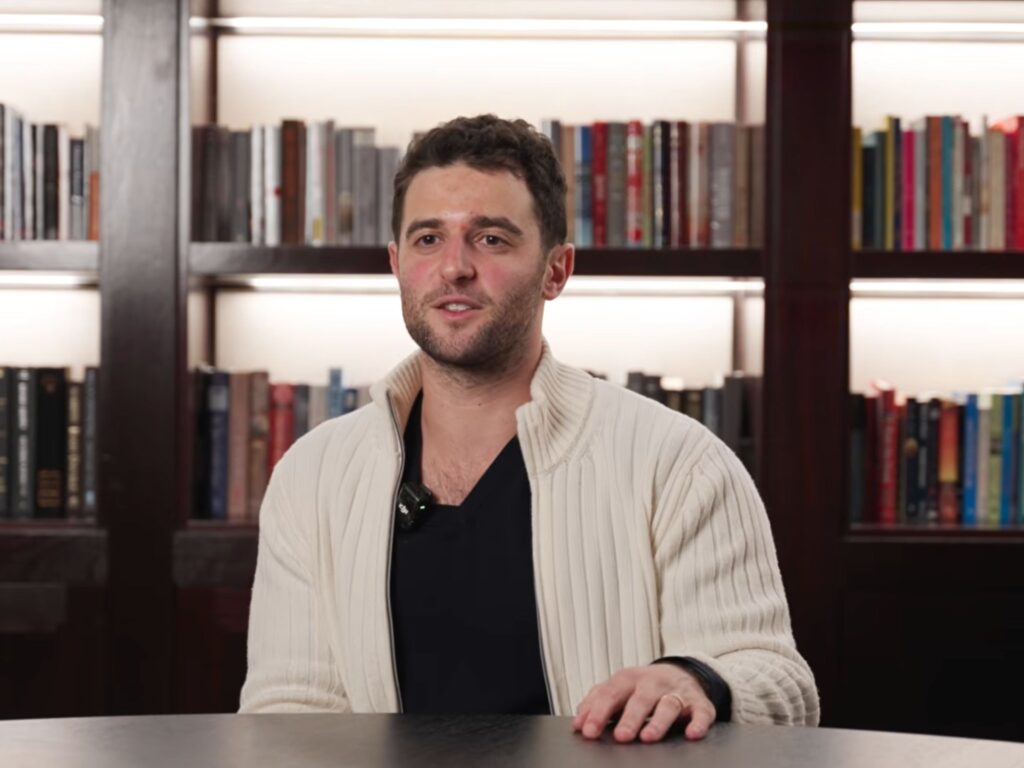
I was recently featured on Hampton’s video series, where I sat down at the Hampton NYC office to talk about something I’ve spent the last decade thinking deeply about: how to build a loyal audience — and what it actually takes to monetize one.
We covered the lessons I learned building Morning Brew from a college newsletter into a business that reached 5 million subscribers and sold for $75 million, and more importantly, how I’d approach audience building if I were starting from scratch today.
In this article, I’ll walk through the key topics we covered, share a link to the full conversation, and include the complete transcript below.
What We Covered
The conversation got into the core principles and tactical frameworks behind building an audience that actually drives business value — not just vanity metrics. Here are some of the themes we explored:
Media as arbitrage — why finding underutilized platforms and formats (like email newsletters in 2017) matters more than being the best on a crowded one
Niche down to scale up — why going hyper-specific with your target audience is the path to the largest possible reach, not the smallest
Showing up daily — how to use AI tools to turn your everyday meetings and learnings into consistent content without burning out
Video as the default — why video (especially YouTube and short-form) is the language of the current moment, and what to do if you’re camera-shy
Watch Now
Watch the full conversation below, or click here to watch on YouTube.
Full Transcript
Hampton Founders: Austin Rief, co-founder of Morning Brew, built one of the most loyal audiences in business media over the past decade. And he did it all over email. So we invited him to the Hampton office to teach us if you wanted to build and monetize an audience today, how would you do it?
Austin Rief: What I would do today if I was building any type of company is…
Hampton Founders: In this video, we’ll break down the four tactics anyone can use to build and monetize an audience and Austin’s one regret from building Morning Brew. But first, it’s important to understand the principle underlying everything Austin built: media as arbitrage.
Austin Rief: So I think media is an arbitrage really, right? Like first thing in building an audience is like you have to figure out what the medium is. We weren’t like, oh newsletters are amazing. We started writing newsletters then we found out oh these things are really good, let’s keep doing that. In 2017 no one was creating newsletters for inboxes. For someone like BuzzFeed or Business Insider, how do we get more page views to our site? That was all they cared about. Very few people were actually sending emails that you read in your inbox that were designed beautifully, that were written really nicely, that the whole experience could just be contained in the inbox. And so we found a white space or like a little place we could play that very few people were playing.
Hampton Founders: By 2019, Morning Brew had exploded to over a million and a half subscribers and $13 million in revenue. The next year, they sold a majority stake to Axel Springer for $75 million. But not everyone understood the value of what they had built. And what one potential buyer said to Austin shows exactly what most people miss.
Austin Rief: She was viewing an email as an email. And an email is very much not an email. We didn’t have 5 million emails, we had 5 million relationships with people who trusted us every single day. And so she was like, well we have 10 million emails. It’s like totally, but people don’t come to your fintech company for daily business content. So sure, like through the ads you’ve run the entire life cycle of your business you have 10 million emails. How many of them are going to open your newsletter? How many of them are going to read your content every day? Sure, we had a smaller audience than they had 100% if you define audience as number of emails. But if you look at people who will do what you say and trust who you are and what you stand for, we had way more value. So she was underestimating the value of a real strong relationship and just viewing things as transactional.
Hampton Founders: Alright, I told you I was going to share four tactics that Austin shared with us. But before I do that, I met Austin in a community called Hampton. So if you’re a founder and you want to meet monthly in person with other founders to workshop your business, check out the description below and apply. Now, the four tactics. It starts with constantly looking for opportunities to be early to a new platform or a new feature.
Austin Rief: You can be amazing but I wouldn’t build an audience today on Facebook. Like the original Facebook. So the first thing is you got to find a medium to actually do it. So you look at every new platform shift like there’s a reason people rush to every new platform because the goal of a new platform is like to make new celebrities, right? When TikTok came out the biggest TikToker wasn’t Kim Kardashian. The biggest TikToker was Charli D’Amelio and these other people and that’s very intentional by the mediums. The mediums want new people to emerge because you can make your own little town or your own ecosystem there. I think the key there though is like you have to be early enough that you’re differentiated but you can’t be too early, right? So maybe 2012, 2013, 2014 for would have done it, would have been too early because no one was doing it to your point and so like it was only experimental people. But we in 2017, 2018 when we first started we got enough people to experiment with it that we can make money. But then like 2019, 2020 comes all of a sudden Axios pours all this money into marketing of them and newsletters and a lot of people were worried about the competition. I was like oh great now more media buyers are going to spend more money on newsletters. They’re going to see that it works and then hopefully they’ll spend some of that on our newsletter. So obviously timing is everything.
Hampton Founders: But you can’t just sit around waiting for the next platform to emerge. And Austin says you should go as niche as possible on existing platforms.
Austin Rief: I think what I would do today if I was building any type of company is I would really think about who am I trying to get in front of. Who is my target buyer? Who is the person I care about? And I would go as niche as possible. The internet incentivizes you being like the X guy or the X girl, right? You’re the DTC guy, you’re the e-comm guy, you’re the SaaS person. And I really would focus on building a brand in the space and really figuring out who you’re writing for. So it’s not just like oh I’m the social media person writing social media content. It’s like no no I am writing content for VP+ heads of social at SaaS companies. And that doesn’t mean if a director signs up to your newsletter you should like not send it to them, of course you should. But I just think you have to get very very specific with who you’re writing to and who your target is because it is so saturated. And that’s why there’s never going to be another Morning Brew because you can’t just say hey I’m going to get 5 million people in the business world to love and engage with general business content. You just can’t do that anymore. Now if there was another platform like if I don’t know if there’s an AI whatever platform, if we’re all wearing Meta glasses and somehow there’s some social media there then maybe you could build a Morning Brew but for some new platform. But on a saturated platform you have to go as niche as possible.
Hampton Founders: In Austin’s view, niching down is actually the path to the biggest possible audience.
Austin Rief: Social media the power law like the top people have the most followers but it’s not like 5 or 10% more. It’s like 10 or 20 or 100x more and the algorithms push it over time and so yeah if you’re the top person in any space it could be as small a space as possible like you will reach a very wide audience. Like look at Andrew Huberman. Like if you would have said three years ago to Andrew Huberman like the best way to become the most famous health and wellness science doctor person in the world is to sit in front of a camera for two and a half hours and talk about science, no one would have been like yeah that’s you’re going to have 5 million followers on Instagram. No one would have said that. It’s so niche, it’s so boring even for people who think about health and wellness, it’s pretty niche and pretty boring. But he’s the biggest person and I guarantee you every I mean way more than half his followers aren’t health and wellness people. They’re like I want a tiny bit of health and wellness content in my diet so I’m going to follow the top person and that’s how the flywheel starts.
Hampton Founders: A lot of people fall into the trap of trying to capture the broadest audience possible and then getting obsessed with impressions and engagement. Austin thinks it’s a lot simpler than that.
Austin Rief: I’ll see people who have you know 50,000 followers on LinkedIn and they’ll drive like two customers a month from their content. I’ll see other people who have basically no followers but every post is very smart, it’s very targeted, they’re very intelligent in what they’re talking about and they’ll drive a customer for every single post. So it’s just about hitting the right people. I have an investor in a company, their customer is very very senior people at media companies: Netflix, Paramount, Hulu. And his content is super esoteric. Like it’s it’s about churn rates of subscription products. Like it’s very complicated to like at least when he writes for those people it’s very not accessible to the average person, most people don’t care about that stuff. But he’s built a network of those senior senior people in the media world because they respect and like his content and very few people are writing content for the EVP of strategy at Paramount. Now he has maybe 3,000 followers on Twitter. He could have 30,000 but would him having 30,000 followers make his company more valuable than having 3,000 of the right followers? Like definitely not. So that’s why he’s gone that route and it’s made sense. The mistake people make is they go okay I’m going to create content to try to get 100,000 followers. It’s like no there’s no point that’s a vanity metric. Like get the 5 or 10,000 followers that you actually care about. The leading indicator is like are people who you respect in the space you’re trying to get in front of DMing you “oh that’s a really interesting post,” are they following you, are they reading your newsletter. So those are maybe the leading indicators but the lagging indicator is like yeah did your LinkedIn post lead to sales over time. If so like it’s working. At the end of the day your goal is to get in front of a certain group of people. If you’re not doing that you’re failing and so you have to figure out what you should do and what you should change to do that.
Hampton Founders: But for your audience to trust you, Austin thinks the most important thing is showing up every day. And he shared a really clever way to do this using AI.
Austin Rief: I would record every one of your meetings. And now it’s so easy with Granola, Claude, whatever. And then at the end of the day I would have AI go through all your notes, find the most interesting topics, and turn into a LinkedIn post. And I would just post that. And so like daily posts. And I think one thing that gets very tricky is as you’re building a company you learn things but you learn them slowly. And so you start to think oh these things are just common sense. They just make sense. I think one of the hardest things is to actually be like no no over the last two months you learned something that’s actually really interesting, you turn that into a LinkedIn post. But it’s really hard if every day you learn 1 or 2% of like a big revelation. At the end you don’t even think you learned something because it happened gradually. You didn’t like win the lottery you like you know made a couple dollars every single day. And so by using AI to turn your LinkedIn posts or your daily conversation and meetings into LinkedIn posts, you’re like oh wait like maybe that is interesting. And when I was really trying to grow an audience on Twitter I was doing no AI so I wasn’t doing that in 2021. But every day I forced myself like I’m going to take the things I learned and I was always shocked at I’d be like oh my god like that feels so obvious to me and all these people found that so interesting. I’m like oh but when did I actually learn that thing? Oh it was just like in the last month. So if I’ve been running a company for six years and I just learned it maybe there are all these other people who don’t actually know it. And so that’s what I would do. I would just learnings from your day is how I’d start.
Hampton Founders: And the last thing, Austin says love it or hate it you probably need video.
Austin Rief: I would default to video. I think video is the most important thing. But if you have someone in front of a camera who’s not very good in front of a camera the content’s not going to be good then maybe you should not do video. And I mean YouTube is obviously like where everything is going. YouTube is becoming TV. I think the fastest growing segment of YouTube is actually connected TV. So people just turn on their TV instead of watching TV they’re watching YouTube which I guess kind of is TV now. I mean the world whether you like it or not the world is a short form video world. And so that’s like every I mean Meta that’s all Instagram is. Snapchat I don’t really use Snapchat but that’s all Snapchat is. TikTok obviously. But even every couple months like LinkedIn takes a stab at trying to figure out video and they’re not going to stop until they get there. Twitter pushes video every once in a while. So video is the like is the language of the the present.
Hampton Founders: Finally, we asked Austin what one thing he regretted from building Morning Brew was. This is what he shared.
Austin Rief: Like one of my big regrets is I was too serious in running Morning Brew. Values in some ways are kind of silly but if you can actually reinforce values, the way to do that is to make it like a funny shtick. Like at Morning Brew we had like the Muggies and we’d like give a Morning Brew mug to someone who embodied a value. I think that’s fine. But in hindsight like we should have given like a something something ridiculous like a huge blow up life size human size mug and the person had to like walk around with it. Something such that like when you left the company you would still talk about, you’d take that other places because it feels so ridiculous at the time but it actually does a very good job of reinforcing what actually matters. And so we had the great wall of opens which is every day no matter what you’re doing at 11 o’clock we stopped what we were doing and we refreshed at the time it was Campaign Monitor which was our ESP and we saw how many opens we had at 11 o’clock. And so and we used the entire wall of the WeWork office which was a very large glass wall and we just write it. And it was the same thing where we would try to understand oh it’s way higher than yesterday, why is that? Oh it’s just because the subject line’s better. Which is important but that’s not a sustainable thing unless we can sustainably keep our subject lines to be great. Or like oh it’s down a lot. Oh actually we had deliverability problems let’s solve that. Same idea of like it reinforced every day what’s the thing that actually matters. The thing that matters is getting more people to open our newsletter at the time. Like I think these like what at the time feel silly phrases and and activities are actually really important because we now tell stories about them 10 years later because you remember them.
Hampton Founders: And last thing I forgot to mention, we are making this video for you. Let us know what else you want to see here. What are some problems that you’re having in your business that you think that we should cover here? And if you are a founder, check us out at joinhampton.com.